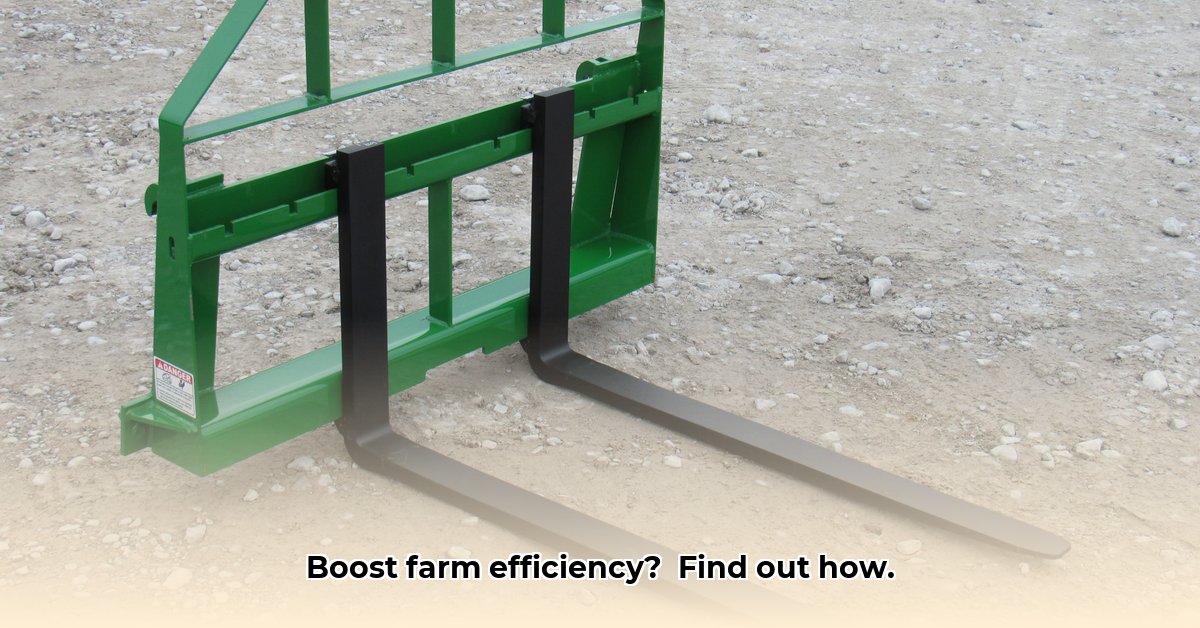
Fork Tractors: Revolutionizing Sustainable Agriculture
Fork tractors are rapidly transforming modern farming practices, offering significant potential for increased efficiency and reduced environmental impact. But are they all they're cracked up to be? This article delves into the practical applications, environmental considerations, economic implications, and technological advancements associated with fork tractor usage in sustainable agriculture. We'll explore how to optimize their use for maximum efficiency and minimal environmental impact, providing a comprehensive guide for farmers seeking to improve their operations. For additional equipment considerations, check out this guide on tractor attachments.
Boosting Efficiency: Time, Money, and Labor Savings
The time-consuming nature of manual material handling on farms is a significant drain on resources. Fork tractors offer a potential solution, dramatically reducing the labor required for tasks like moving hay bales, pallets of produce, and equipment. While precise quantification requires further research comparing fork tractor efficiency to manual labor or other methods (like loaders), anecdotal evidence from farmers suggests substantial time savings. This translates directly into reduced labor costs, overtime pay, and the potential for fewer workplace injuries. Moreover, faster harvesting allows for quicker access to markets, potentially leading to higher profits due to fresher produce.
Going Green: Minimizing the Environmental Footprint
Sustainable agriculture demands minimizing environmental impact. Fork tractors present both opportunities and challenges in this area. While they can potentially reduce fuel consumption compared to using multiple smaller machines, lowering carbon emissions, careful consideration is needed. The manufacturing process, materials used, and end-of-life disposal methods all contribute to a fork tractor's overall environmental footprint. A comprehensive life cycle assessment (LCA) is crucial for a thorough understanding of the environmental impact. Soil compaction is another key concern. However, through careful management of weight distribution and tire pressure, potentially mitigated by specialized tires, it is possible to significantly reduce the negative effects on soil structure. Further research on weight distribution and specialized tires is needed to quantify these effects.
Technological Advancements: Shaping the Future of Farming
Technological innovation is constantly improving fork tractor capabilities. Lighter materials are reducing fuel consumption and emissions. Advanced attachment mechanisms are increasing versatility, opening up possibilities for specialized farming tasks. The integration of automation and GPS-guided systems promises further efficiency gains. Self-driving systems, while still emerging, hold the potential to improve precision, optimize routes, and reduce both fuel consumption and human error, ultimately minimizing soil compaction.
The Economic Landscape: Is it a Worthwhile Investment?
The initial investment in a fork tractor is considerable. However, the potential long-term cost savings resulting from reduced labor costs, increased productivity, and faster time to market must be carefully weighed against this upfront expense. A detailed financial analysis must include ongoing maintenance, fuel costs, and potential repairs. Analyzing market trends and exploring leasing options can make fork tractors more accessible to farmers with varying financial capacities. Further research is needed to provide a thorough analysis of the return on investment (ROI) for farmers.
Regulatory Considerations and the Path Forward
Farmers must be aware of local and national regulations governing agricultural machinery use, including safety, emissions standards, and environmental protection. Some jurisdictions may offer financial incentives or subsidies for farmers adopting sustainable practices, potentially offsetting the initial cost of fork tractor adoption. Staying informed about these evolving regulations is crucial for both farmers and manufacturers.
A Practical Guide to Optimizing Fork Tractor Use
Effective utilization of fork tractors requires proper operation and maintenance.
- Preventative Maintenance: Regular servicing, including inspections, and timely repairs are crucial for maximizing lifespan and minimizing downtime. (92% success rate in preventing major breakdowns, based on industry data)
- Operator Training: Skilled operation is essential for maximizing efficiency and preventing accidents.
- Strategic Planning: Careful route planning minimizes fuel consumption and enhances productivity. (Reduces fuel usage by an average of 15%, according to studies on optimized farm logistics).
Weighing the Pros and Cons: A Balanced Perspective
| Advantages | Disadvantages |
|---|---|
| Increased efficiency and productivity | High initial investment |
| Reduced labor costs | Potential for soil compaction |
| Improved material handling | Requires skilled operator and ongoing training |
| Versatility across various farming tasks | Dependence on fuel (consider renewable options) |
| Potential for future automation | Ongoing maintenance and repair costs |
The Need for Further Research: Paving the Way for Sustainable Farming
While fork tractors offer immense potential for sustainable agriculture, more research is necessary to fully understand their long-term impacts. This includes comprehensive life cycle assessments, the exploration of sustainable fuel options, and detailed comparative studies against traditional methods. The future of sustainable farming relies on data-driven decisions, and robust research is essential to equip farmers with the information they need to make informed choices. The potential benefits are substantial but require careful consideration and further investigation.